
Everything You Need to Know About SHOUTcast Radio: From Meaning to Streaming Setup
Last Updated on
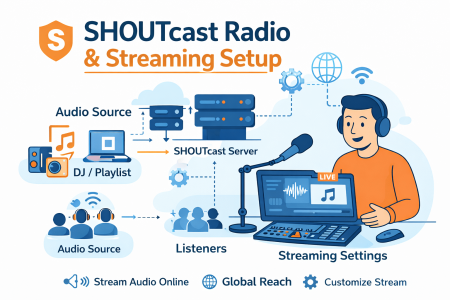
Shoutcast is a streaming media platform and protocol for internet radio broadcasting used to deliver audio streams in MP3 or AAC format over the internet.
If you’re looking to start your online radio station, SHOUTcast is one of the most popular and time-tested solutions available today. In this guide, we’ll cover everything from the SHOUTcast meaning to how to get started with a SHOUTcast radio station, including where to find SHOUTcast streams, what a SHOUTcast server is, and how to appear in the SHOUTcast directory.
Table of contents
- What Is SHOUTcast?
- How SHOUTcast Changed Internet Radio
- Why Choose a SHOUTcast Radio Station?
- SHOUTcast Use Cases in 2026
- How to Set Up a SHOUTcast Server
- SHOUTcast Winamp Integration
- Getting Listed in the SHOUTcast Directory
- Exploring SHOUTcast Streams
- Pros and Cons Compared to Internet Radio Alternatives
- Conclusion
- FAQ
What Is SHOUTcast?
Let’s start with the basics: SHOUTcast is a streaming protocol developed by Nullsoft (the creators of Winamp) that allows you to broadcast audio over the internet. It’s commonly used for hosting live online radio stations and has powered thousands of stations globally.
So, what’s the exact SHOUTcast meaning? It stands for “SHOUT broadcasting system,” allowing for audio streaming in MP3 or AAC format. Think of it as the virtual transmitter that connects your radio content to listeners across the globe.
How SHOUTcast Changed Internet Radio
Before SHOUTcast became popular, streaming audio online was not nearly as plug and play as it is today. SHOUTcast helped standardize a simple way for broadcasters to send one audio feed to a server, and for listeners anywhere in the world to press play and tune in.
It also helped shape internet radio culture. DJs and small stations could build real audiences without needing a local FM license, and listeners could discover genres and communities that were hard to find on traditional radio. That mix of accessibility, worldwide reach, and simplicity is a big reason SHOUTcast is still mentioned so often when people talk about online radio streaming.
And because SHOUTcast became widely supported by common players and tools, it lowered the barrier to entry for new stations. If you could run broadcasting software and point it to a SHOUTcast server, you could be on the air.
Why Choose a SHOUTcast Radio Station?
Running a SHOUTcast radio station means you’re using reliable, widely compatible technology. Whether you’re an independent DJ, a music enthusiast, or a business looking to stream content 24/7, SHOUTcast gives you the flexibility and scalability to reach a worldwide audience.
Some of the biggest reasons creators choose SHOUTcast include:
- Easy integration with popular media players like SHOUTcast Winamp
- Broad compatibility with mobile apps and directories
- Access to the SHOUTcast directory for added visibility
- Real-time listener statistics and server controls
SHOUTcast Use Cases in 2026
Even with huge music platforms and podcasts everywhere, SHOUTcast still makes sense in 2026 because it solves a very specific need, live or always on streaming that you control. Here are a few common ways stations are using SHOUTcast today.
- 24/7 music stations with Auto DJ, build a nonstop station that runs even when you are offline, great for niche genres, local scenes, and themed stations.
- Live DJ sets and scheduled shows, stream live events, interviews, mixes, and call in style shows, then switch back to automation when the show ends.
- Talk radio and community radio, create a station for a town, a community group, a church, or a bilingual audience that wants something more personal than big platforms.
- Business and brand audio, in store radio, internal announcements, training streams, or a branded station for a community and customers.
- Simple “one stream” distribution, one stream link that works across web players, apps, and directories, without needing a complex multi platform setup.
If your goal is to stream your own audio, build listeners, and keep control of your station, SHOUTcast stays a practical choice, especially when paired with reliable hosting and a clean HTML5 player.
How to Set Up a SHOUTcast Server
To broadcast, you’ll need a SHOUTcast server. This is the backbone of your radio station a streaming server that receives your live feed and delivers it to your listeners. At ShoutCheap, we offer managed SHOUTcast server hosting with auto-DJ, Centova Cast control panel, and high bandwidth capacity, perfect for stations of any size.
Steps to set up:
- Download the necessary software (SHOUTcast download) for your operating system.
- Install and configure the SHOUTcast DNAS (Distributed Network Audio Server).
- Link your broadcasting software (like SHOUTcast Winamp with the DSP plugin) to your server.
- Start streaming!
SHOUTcast Winamp Integration
Back in the early days, SHOUTcast Winamp was the go-to combination for setting up internet radio. Winamp, the legendary media player, allows DJs to broadcast using a DSP plugin that connects to your SHOUTcast server. While modern tools have emerged, many still appreciate the nostalgia and simplicity of this classic combo.
If you’re looking for SHOUTcast download tools like the SHOUTcast DSP plugin for Winamp, you can still find them on the official SHOUTcast site or through reliable hosting providers like us.
Getting Listed in the SHOUTcast Directory
Once your stream is live, it’s time to grow your audience. One of the best ways to do that is by listing your station in the SHOUTcast directory, a public listing of live SHOUTcast streams. This allows listeners from around the world to discover your station based on genre, language, or popularity.
To be listed:
- Ensure your server is public and not set to private mode
- Follow the SHOUTcast directory guidelines
- Submit your station directly from the server configuration or control panel
Exploring SHOUTcast Streams
Thousands of SHOUTcast streams are active at any given moment, covering every genre imaginable from electronic dance music to talk radio. If you’re a listener, it’s a great way to discover unique stations. If you’re a broadcaster, it’s a great way to benchmark your station and learn from others.
Is SHOUTcast Free?
One of the most common questions is whether SHOUTcast is free, and the answer is: it depends on your usage.
- SHOUTcast Free Plan: SHOUTcast does offer a free version of its DNAS server software, which lets you stream audio without paying licensing fees to SHOUTcast itself. This is perfect for hobbyists and smaller stations.
- Limitations: The free version includes a limited listener capacity and may require you to include ads or use SHOUTcast’s monetisation system. Additionally, you may not get access to all premium features like priority support or advanced analytics.
- Hosting Not Included: Even though the software is free, you still need a hosting environment to run it. That’s where services like ShoutCheap come in, offering ready-to-use SHOUTcast server plans so you don’t have to worry about setting everything up from scratch.
So yes, SHOUTcast free is a real option, but if you’re serious about streaming with quality, uptime, and control, a reliable hosting plan is the smart choice.
Pros and Cons Compared to Internet Radio Alternatives
SHOUTcast is not the only option for internet radio streaming. Depending on your goals, you might also consider Icecast, self hosted streaming stacks, or using a third party platform. Here is a simple pros and cons view to help you decide.
Pros of SHOUTcast
- Beginner friendly setup, easier to get running fast with common tools and control panels.
- Strong compatibility, widely supported in players and common streaming workflows, especially MP3 and AAC.
- Directory exposure, the SHOUTcast directory can help listeners discover your station.
- Great for “one main stream” stations, perfect when you just want a reliable single stream that works everywhere.
Cons and When to Consider Alternatives
- Less flexible for advanced routing, if you need multiple mount points, fallback streams, or complex logic, Icecast can be a better fit.
- Fewer codec options, if you want formats like Opus or more experimental setups, Icecast is usually more flexible.
- Not a music platform, SHOUTcast is infrastructure, you still need to create, schedule, and promote your content.
- Third party platforms trade control for convenience, they may simplify setup, but you often give up flexibility, branding, or ownership of the listener relationship.
If you want a deeper breakdown, see our full comparison here: SHOUTcast vs Icecast comparison.
Conclusion
Whether you’re new to online radio or a seasoned broadcaster, SHOUTcast remains a powerful and flexible platform for audio streaming. From setting up a SHOUTcast radio station to downloading the tools you need and getting listed in the SHOUTcast directory, the process is easier than ever, especially with the right hosting partner.
Ready to launch your station? Visit ShoutCheap.com and explore our affordable SHOUTcast server plans tailored for broadcasters like you.
- SHOUTcast Hosting Plans: Explore our affordable SHOUTcast hosting options to get started with your own radio station.
- SHOUTcast vs Icecast Comparison: Understand the differences between SHOUTcast and Icecast to choose the best platform for your needs.
- How to Get Listed in the SHOUTcast Directory: Learn the steps to get your station featured in the SHOUTcast directory and attract more listeners.
Related SHOUTcast Guides
- Is SHOUTcast Still a Thing?
- Is SHOUTcast Free?
- What Does Shoutcasting Mean?
- SHOUTcast vs Icecast, Which Is Better?
- How To Use AutoDJ To Keep Your SHOUTcast Station Online 24/7?
- How To Get a Better Audio Streaming Quality?
- SHOUTcast Bandwidth and Listener Limits Explained
- How To Make Your SHOUTcast Stream HTTPS Secure?
- Shoutcast vs Icecast in 2026
- Best Software for Shoutcast Broadcasting
- How to Embed Shoutcast Player on a Website
FAQ
SHOUTcast is a streaming protocol developed by Nullsoft (creators of Winamp) that allows you to broadcast audio over the internet. It stands for “SHOUT broadcasting system” and supports streaming in MP3 or AAC formats.
SHOUTcast offers easy integration with popular media players like Winamp, broad compatibility with mobile apps and directories, access to the SHOUTcast directory for added visibility, and real-time listener statistics and server controls.
To set up a SHOUTcast server, download the necessary software for your operating system, install and configure the SHOUTcast DNAS, link your broadcasting software (like SHOUTcast Winamp with the DSP plugin) to your server, and start streaming.
Yes, SHOUTcast Winamp integration allows DJs to broadcast using a DSP plugin that connects to your SHOUTcast server. While modern tools have emerged, many still appreciate the simplicity of this classic combination.
To get listed, ensure your server is public, follow the SHOUTcast directory guidelines, and submit your station directly from the server configuration or control panel.
You need a computer running Windows, macOS, or Linux, a broadband internet connection, and broadcasting software. Advanced users might also use a mixer and microphone for live content.
The SHOUTcast directory is a public listing of live SHOUTcast streams, allowing listeners to discover your station based on genre, language, or popularity.
Promote your SHOUTcast directory link on your website, app, and social media, consider using advertising or radio directories, and embed your SHOUTcast stream on landing pages or blog posts to increase visibility.
SHOUTcast provides reliable, widely compatible technology, easy integration with media players, access to the SHOUTcast directory, and real-time listener statistics and server controls.
Yes, whether you’re an independent DJ, a music enthusiast, or a business looking to stream content 24/7, SHOUTcast offers the flexibility and scalability to reach a global audience.
To maintain high uptime, avoid stream disconnections, downtime, or frequent restarts, and ensure your stream sends correct, real-time song titles and artist names.
Yes, Shoutcast remains relevant, especially for broadcasters who want full control over their streams, flexible setup options, and broad compatibility with players and listeners worldwide. While newer streaming platforms and protocols exist, Shoutcast’s simplicity and directory exposure continue to make it useful for many internet radio creators and niche stations.
Shoutcast is used for broadcasting live and automated audio over the internet. Common use cases include 24/7 music streams, talk radio, DJ sets, community stations, in-store audio, and branded audio channels. It turns local audio sources into streams that listeners anywhere can access with a player or web link.
To start a Shoutcast stream, you need a Shoutcast server (either self-hosted or via a hosting provider), broadcasting software (like BUTT, Nicecast, or a control panel tool), and your audio source. Configure the encoder to send audio to the server, set your bitrate and format, and then share the stream URL so listeners can tune in.


