
What Is an Audio Streaming Server?, How It Works for Online Radio?
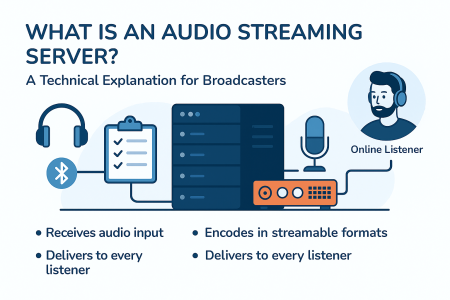
An audio streaming server is a specialized system that receives your audio, converts it into a streamable format, and delivers it to every listener in real time. It is the core engine behind any online radio station, podcast stream, or live audio broadcast.
Key Takeaways
- An audio streaming server receives and encodes audio in real time, delivering it to listeners simultaneously.
- Regular web hosting cannot handle audio streaming due to its need for low latency and high connection concurrency.
- Streaming servers process audio by ingesting, encoding, and distributing packets continuously to ensure uninterrupted playback.
- Different types of audio streaming servers include Shoutcast, Icecast, and HLS-based servers, each serving different needs.
- Server quality depends on CPU, RAM, bandwidth, and network speed, which impact streaming performance and listener capacity.
Table of contents
This guide explains how an audio streaming server works, the components inside it, and why it is different from regular web hosting or a basic website server.
What an Audio Streaming Server Actually Does
The job of a streaming server is simple, but highly technical. Its main purpose is to take your audio input and make it available to anyone around the world. It does this by performing three essential tasks.
- Receives your audio from software like Mixxx or via AutoDJ
- Encodes the audio into streaming formats such as MP3 or AAC
- Delivers the stream to multiple listeners at the same time
Because audio must be delivered continuously without interruptions, streaming servers are designed for real-time processing and stability.
How a Streaming Server Processes Audio
Every audio streaming server follows the same general technical steps when broadcasting your content.
1. Ingest
This is the moment your audio enters the server. It can come from a live encoder or from an AutoDJ system.
2. Encoding
The server converts your audio into formats suitable for online playback. Common formats include MP3, AAC, and Opus.
3. Packet Distribution
Your audio is broken into small packets and delivered to listeners with minimal delay. This real-time distribution is the main reason streaming servers cannot be replaced by regular website hosting.
Why Regular Web Hosting Cannot Handle Audio Streaming
Traditional web servers are built for files, websites, and static content. They are not optimized for continuous delivery. Audio streaming requires fast buffering, low latency, and high connection concurrency, especially when you have many listeners.
A streaming server, on the other hand, is built specifically to handle:
- Continuous audio delivery
- Thousands of concurrent listener connections
- Real-time processing
- Streaming formats, not file downloads
This specialized design is why audio broadcasting requires a true streaming server.
Types of Audio Streaming Servers
There are several types of streaming servers, each designed for different broadcasting needs.
1. Shoutcast Servers
A classic streaming protocol used by many music stations. Supports MP3 and AAC streaming.
2. Icecast Servers
A flexible open source server that supports MP3, AAC, and Opus streams. Common for both music and talk stations.
3. HLS-Based Streaming
A modern streaming method used by mobile apps and browsers. Great for high stability and long play sessions.
Server Resources That Affect Streaming Quality
The performance of a streaming server depends on several important hardware and network resources.
- CPU handles encoding and real-time processing
- RAM keeps buffers stable under load
- Bandwidth determines how many listeners the server can support
- Network speed affects latency and listener experience
Why Streaming Servers Matter for Online Radio
Without a streaming server, an online radio station cannot deliver audio reliably. The server ensures that every listener receives the same uninterrupted broadcast, no matter where they are located.
Once you understand how streaming servers work, you can choose the right hosting or broadcasting setup with confidence.
Related Guides
- Complete Guide to Internet Radio Hosting
- Icecast Hosting Overview
- SHOUTcast Radio Guide
- How to Set Up an Internet Radio Station
FAQs
An audio streaming server is a specialized system that receives your audio, encodes it into streaming formats, and delivers it to listeners in real time.
It receives your audio input, encodes it into formats like MP3 or AAC, splits it into packets, and delivers those packets continuously to every listener connected.
No, regular web hosting cannot handle continuous audio delivery. Streaming requires real-time processing, fast buffering, and high connection concurrency that only streaming servers provide.
Server quality depends on CPU power, RAM, network speed, and available bandwidth, all of which affect real-time audio performance and listener capacity.
The most common types are Shoutcast servers, Icecast servers, and modern HLS-based streaming systems used in apps and mobile players.


